
Field Notes
The most valuable paragraph I ever negotiated into a lease had nothing to do with rent.
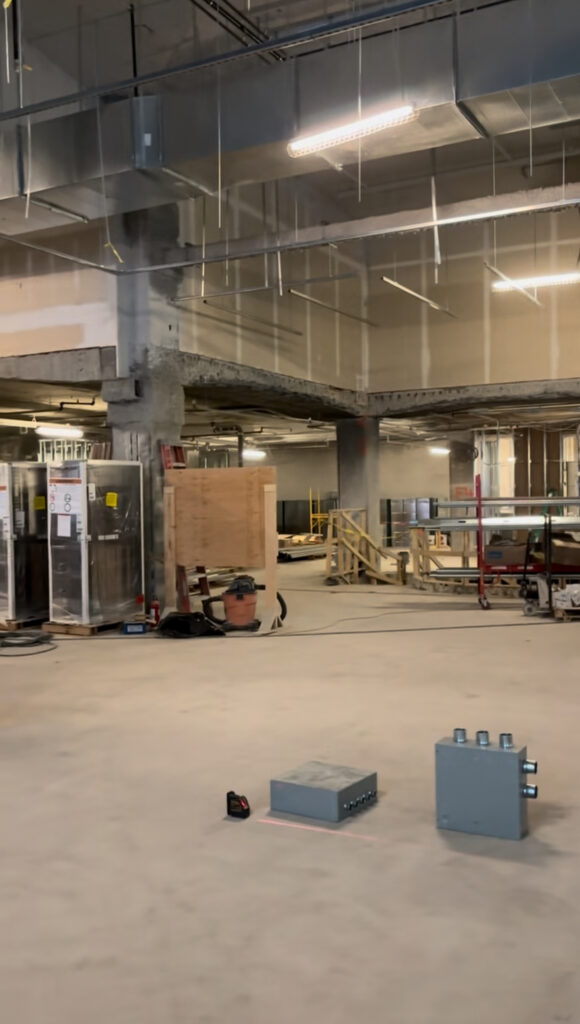
It sat in Schedule C, in a document long enough that most people skim it. It said the landlord would deliver the space stripped. Not a vanilla shell, with the previous tenant’s walls and ceilings tidied up and left in place. A grey shell. Everything built by the last occupant removed, back to the structure, before we took possession.
I asked for it because of the flagship before it. On that project the landlord’s drawings showed the structural columns, but not their true size. We found out when demolition opened the walls, and by then the design had already been drawn around a room that did not exist.
The next flagship was in a building with a long history of tenants and alterations. We had reason to believe there was more behind the walls than any drawing showed. Records suggested there had once been a mezzanine. When we surveyed the space, we could not find it. The ceiling had been dropped low and everything above it was covered.
That was the whole point. If we could not see it, we could not price it.
The clause was never about the mezzanine. It was about refusing to bid against a space we could not see.
The landlord agreed. Demolition ran for roughly five months. A raised floor across fifteen to twenty thousand square feet came out. The walls came open all the way back to where the mezzanine had once stood.
None of that was on our programme.
That was the first thing the clause did. Five months of demolition, and every surprise it turned up, sat on the landlord’s timeline and the landlord’s budget rather than ours. If it ran late, the delay was theirs. The saving on our construction budget was substantial. When we took possession, we started from a structure we could see.
The second thing I had not fully anticipated. The contractor doing the demolition spent those months inside the building, learning every condition it held. When we went to bid for our construction, they bid as well. They were the only bidder who had already seen what was behind every wall, and their number was built on knowledge the others could only estimate. They won the contract. We started construction with a team that already knew the building.
The third was freedom. We were not designing around what a previous tenant had left behind, or around conditions we expected to discover later. We designed for the space as it actually was, and we were able to take it further than it had been taken before.
Now consider the alternative. If demolition had been ours, every one of those discoveries would have arrived as a change order. On our budget, during our construction, against an opening date that had already been announced. That is where large builds lose control of their numbers.
Nobody celebrates a clause like this, because when it works nothing happens. There is no crisis to explain, no overrun to defend, no emergency meeting. The absence of a problem does not appear in any report.
That is exactly why it gets skipped. The pressure to sign arrives before anyone has thought hard about what the space will actually require. Rent, term and incentives get negotiated line by line. The section describing the condition of the space gets read quickly, if it is read at all.
But that section is where a building’s unknowns are either kept by the landlord or handed to you. It is decided in a paragraph, before the design team is briefed and long before a contractor walks the site.
A store that opens on a predictable budget and an honest timeline gets to introduce itself to its community the way it was intended to. A store that inherits a building’s surprises spends its first months explaining them.
The most expensive conditions on a retail build are usually the ones you agreed to inherit without reading.


Be the first to comment